
India can expand its tourism economy tenfold over the next five years without relying on massive capital expenditure, provided the nation focuses on eliminating administrative friction for international visitors and optimising existing attractions.
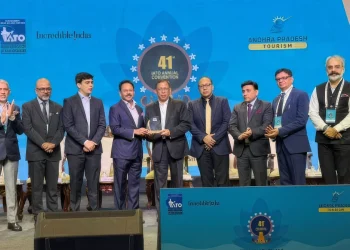
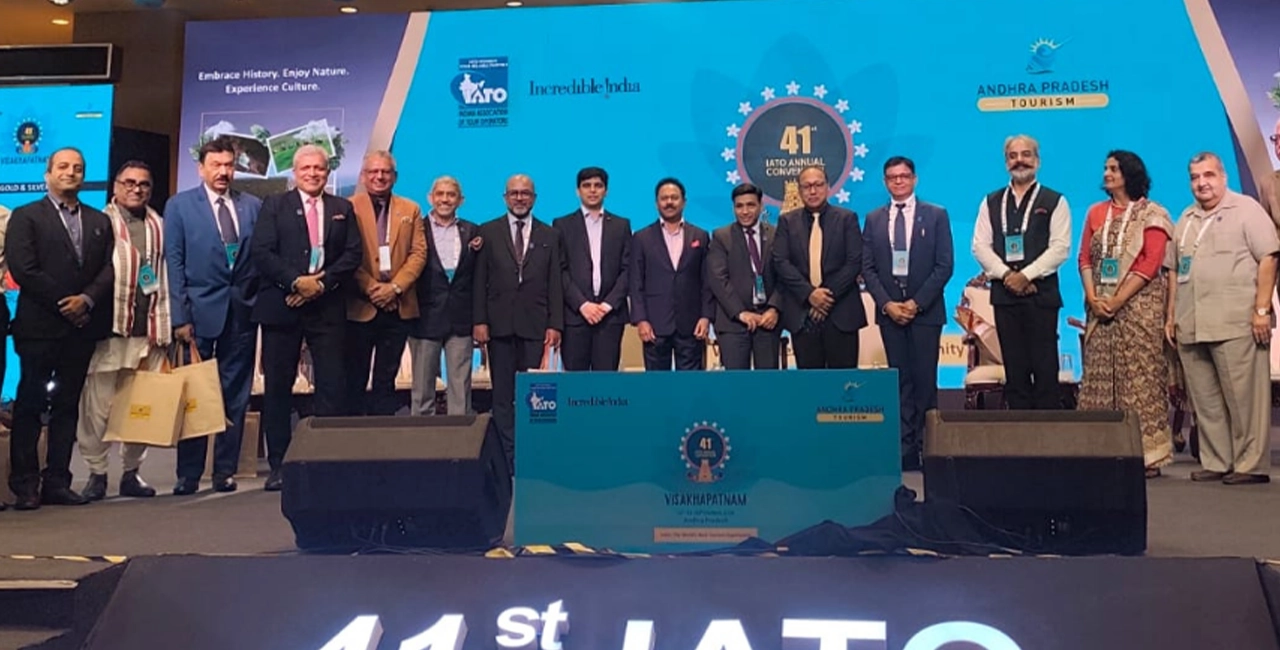
That evaluation formed the central outcome of the forty-first annual convention of the Indian Association of Tour Operators, which concluded at the Novotel Visakhapatnam Varun Beach in Andhra Pradesh.
Addressing delegates during the closing session, Suman Billa, Additional Secretary and Director General at the Ministry of Tourism, stated that industry growth depends far more on operational efficiency than on building new physical projects. Billa cited extending the operating hours of cultural monuments, developing night economies, and granting foreign travellers access to existing golf courses as practical measures to generate fresh travel experiences immediately.
He singled out visa procedures as a primary area where reducing administrative friction would yield high returns. To execute this efficiency drive, Billa outlined plans for an India digital tourism stack structured around four operational pillars.
Under the ministry’s proposals, foreign travellers will receive a personal quick-response code containing verified identity credentials, eliminating repeated passport verifications during hotel check-in procedures. A digital wallet linked to international credit cards will grant foreign visitors direct access to the unified payments interface across local merchants while logging spending touchpoints to facilitate future tax refunds.
The digital strategy also incorporates biometric technology similar to Digi Yatra to clear queues at major historic sites, alongside the integration of travel services onto the Open Network for Digital Commerce to allow tour operators to discover and package vetted itineraries with ease.
Billa emphasised that while India possesses world-class heritage and strong global travel interest, the country has struggled to merge those assets into a fully viable economic ecosystem. Removing process bottlenecks, he noted, provides the structural framework necessary to scale the national tourism economy tenfold over the next five years.
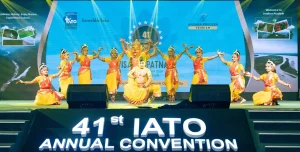
Beyond central policy discussions, the convention generated immediate commercial opportunities for the host state of Andhra Pradesh. Sunil Mishra, Honorary Secretary of the association, reported that local hoteliers and travel agents expect a surge in both domestic and international bookings following the event. Mishra added that delegates gained practical knowledge on integrating artificial intelligence into commercial operations and travel itineraries.
Regional representatives also used the forum to present specific destination proposals. Salam Padmapati, Additional Director of Tourism for Manipur, noted that while the state is navigating a difficult period, previous visits by association members demonstrated its safety. She urged tour operators to market organized two-day and three-night packages highlighting Manipur’s polo heritage, Loktak Lake, Keibul Lamjao National Park, and the Sangai.
Gavin Dias, General Manager of the Goa Tourism Development Corporation, stated that aligning central policy with state destinations strengthens public-private partnerships, last-mile connectivity, and multi-destination circuits.
Private sector operators endorsed this focus on product development. Sanjay Basu, Chairman of Far Horizon Tours India, called for new travel verticals such as coastal cruising to capture foreign markets, while Kamal Bhardwaj, Director of Rainbow Travels, highlighted artificial intelligence and expanding domestic demand as key growth drivers.
However, the gathering also exposed missed promotional opportunities for state bodies that did not attend. Nasir Shah, Chairman of the Jammu and Kashmir chapter of the association, noted that while the event proved valuable for networking, Kashmir derived no concrete gains because the gathering was structured around the host state of Andhra Pradesh.
Shah observed that had the Jammu and Kashmir Tourism Department chosen to participate, it could have showcased border tourism, new routes, and cultural centres directly to the one thousand tour operators in attendance.
As the delegates disperse from Visakhapatnam, the focus turns entirely to execution. The success of this annual gathering will ultimately be judged by whether the Ministry of Tourism can translate its ambitious digital stack and friction-free visa proposals into concrete administrative reform.

Founded in 2016, The Traveller Trails is a print and digital magazine and a trusted source for current news, trends, analysis, opinions, interesting blogs, videos and exclusive interviews from every corner of the world.